








How do you choose charging Cables, adapters and Power Banks?
When choosing accessories, what matters most is what you need them for – charging devices, transferring files, connecting a monitor or having enough power on the go. For cables, the correct connector and supported functions are important; for chargers, power and compatibility; and for power banks, especially capacity and intended use.
Charging and data Cables
Choose a cable according to your device, connector type and supported charging power.
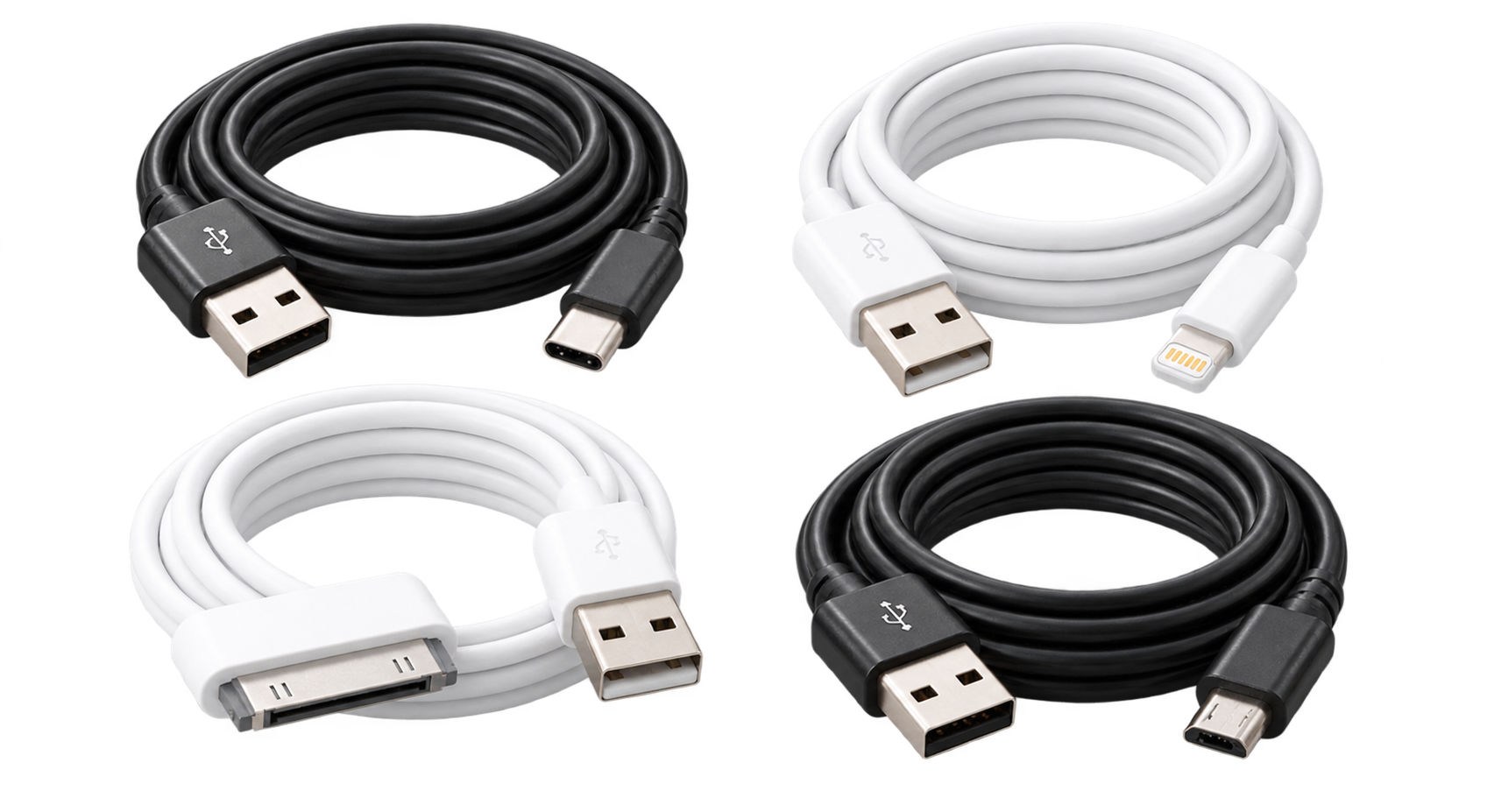
What should you look out for? Charging Cables differ in connectors, power and data speed. For USB-C cables, check the supported power – 60 W is sufficient for most smartphones, while more powerful laptops may require 100 W or more. Choose the cable length according to the distance between the devices.
Charging Adapters and Chargers
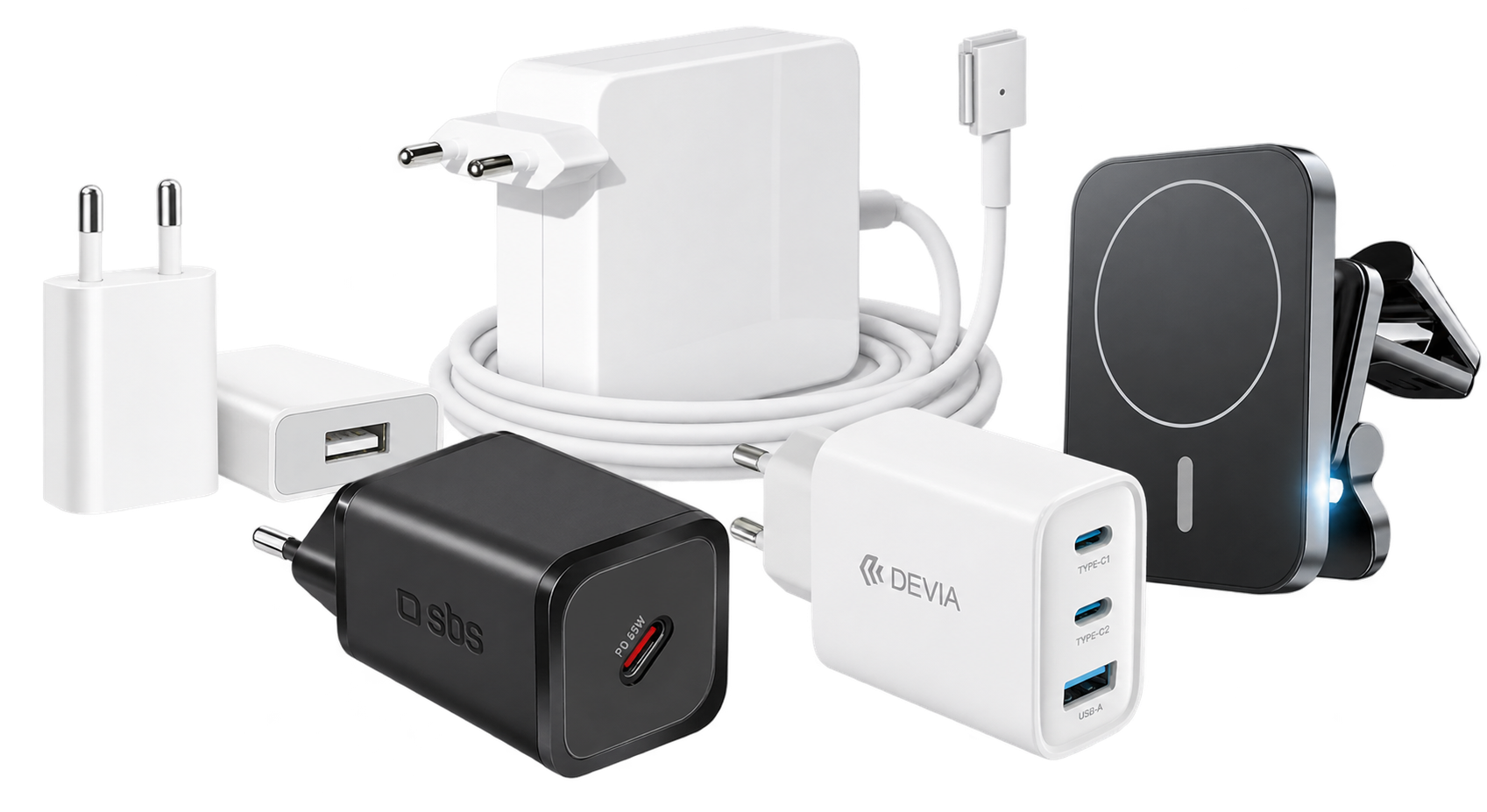
When choosing a charger, consider the adapter type, power, connector and number of ports.
Which charger should you choose? Standard adapters with an output of 5–15 W are sufficient for everyday charging, while compatible fast chargers enable shorter charging times. A 20–30 W USB-C PD charger is suitable for many smartphones.
Selected iPhones can be charged to approximately 50% in 30 minutes. Charging speed depends on the device, adapter and cable. For example, selected Samsung Galaxy models with 45 W charging require a compatible PD/PPS Adapter and a 5 A USB-C cable.
Power Banks
When choosing a Power Banks, consider its capacity, power, features, dimensions and weight.
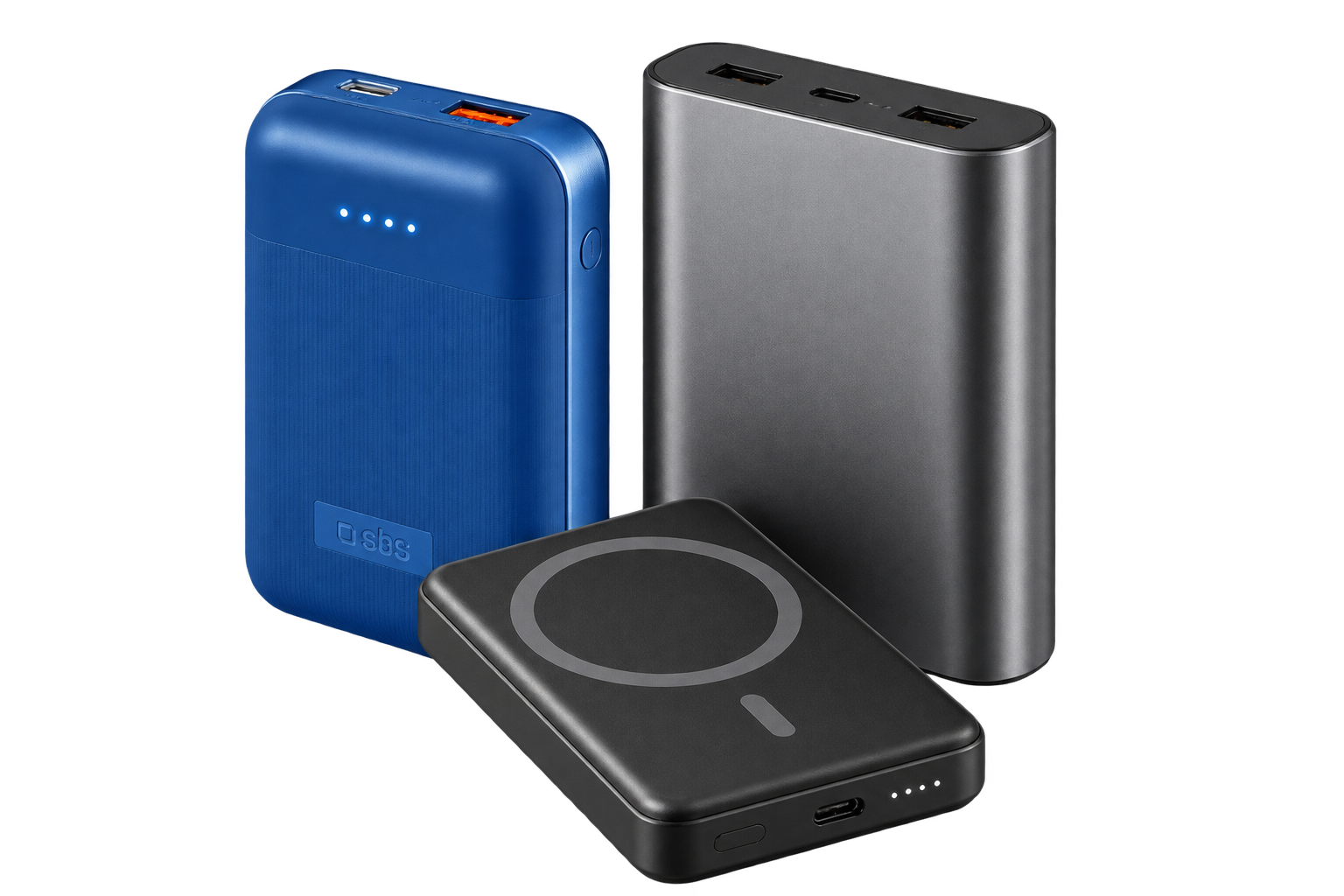
What capacity Power Banks do you need?
Approximate number of charges for a smartphone with a battery of around 5,000 mAh when charging via cable.
FAQ
Yes, if it is compatible. The phone regulates the power it draws, so a 65 W Adapter will not automatically charge it at 65 W.
A cable with the correct connector and supported power. A 60 W USB-C cable is sufficient for most smartphones. Selected Samsung models with 45 W charging require a 5 A cable and a compatible Adapter.
mAh indicates the capacity of the Power Banks battery. Wh (watt-hours) expresses the amount of stored energy and is also used for air transport limits.
Yes, if the laptop supports USB-C charging. You need a compatible charger and a cable with sufficient power.
Yes, but only in carry-on baggage. Check the conditions with the specific airline.
Standard chargers provide regular charging power. Fast chargers support higher power and technologies such as USB PD or QC, which enable faster charging of compatible devices.

