






How to Choose Service Chemicals for Electronics Repair
Choose service chemicals according to the specific task and the part of the device you will be working on. Before use, always check whether the product is suitable for the material and follow the manufacturer’s instructions.
| Planned task | Suitable product |
|---|---|
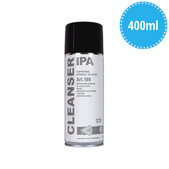
| Cleaning circuit boards, contacts and connectors | Isopropyl alcohol or an electronics cleaning product |
| Removing dust from hard-to-reach areas | Compressed air |
| Removing adhesive or label residue | Adhesive remover |
| Cleaning suitable parts in an ultrasonic cleaner | Ultrasonic cleaning fluid |
| Cleaning or treating selected camera components | Product designed for cameras and optical components |
| Restoring heat transfer between a component and a heatsink | Thermal paste |
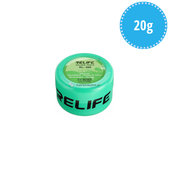
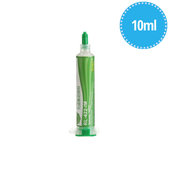
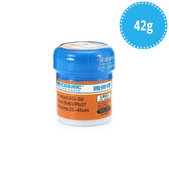
| Soldering and repairing electronic connections | Solder paste or flux |
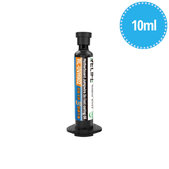
| Protecting a repaired section of a circuit board | UV solder mask |
| Diagnosing faults that react to temperature changes | Freezer spray |
Cleaning Products for Electronics
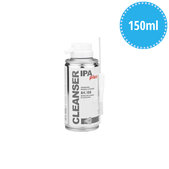
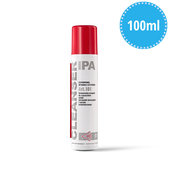
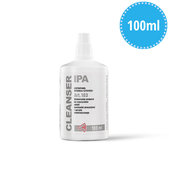
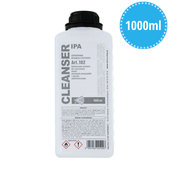
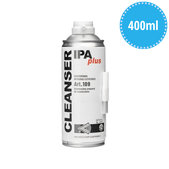
Isopropyl Alcohol and Cleaning Products
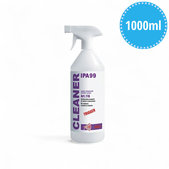
Isopropyl alcohol and specialised cleaning products are used to clean suitable electronic components and surfaces.
They mainly help remove:
- grease,
- dust and common dirt,
- fingerprints,
- selected residue left after servicing.
They can be used, for example, on circuit boards, contacts and connectors or to degrease a suitable surface before bonding. Individual products differ in composition, concentration and application method, so always check their intended use.
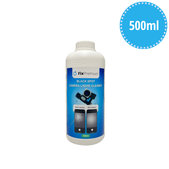
Circuit Board Cleaners
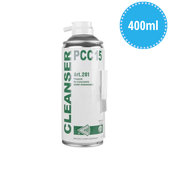
Circuit board cleaners are designed to clean electronic circuits after soldering, diagnostics or repairs.
They can help remove:
- flux residue,
- grease,
- dust,
- other dirt deposited on the circuit board.
Choose a specific product according to its intended use and the materials it may come into contact with. Not every cleaner is suitable for all plastics, coated surfaces or sensitive components.
Adhesive Removers
When replacing a display, battery, rear housing or another bonded part, the residue of the original adhesive must be removed.
Adhesive removers can make it easier to remove:
- service adhesive residue,
- sealing tapes,
- double-sided adhesive tapes,
- adhesive left after removing a display, battery or housing.
Apply the product in a small amount and prevent it from entering speakers, microphones, connectors and other sensitive components. Before fitting the new part, the surface must be clean, dry and free of grease.
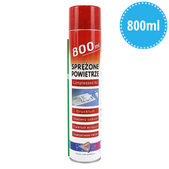
Compressed Air for Cleaning Electronics
Compressed air is used to remove loose dust from areas that cannot be easily reached with a brush or cloth.
It can be used, for example, to clean:
- fans and heatsinks,
- keyboards,
- internal parts of computers and laptops,
- gaming consoles,
- device connectors and openings.
Compressed air does not remove grease or firmly attached dirt. When cleaning a fan, prevent it from spinning uncontrollably and use the container in the position and from the distance recommended by the manufacturer.
Ultrasonic Cleaning Fluids
Ultrasonic cleaning fluids are used to clean suitable electronic parts and circuit boards. Ultrasound helps loosen dirt even in hard-to-reach areas.
Cleaning may help remove:
- deposited dirt,
- selected residue left after soldering,
- dirt around components,
- some residue caused by contact with liquid.
Use only a fluid suitable for the material and type of ultrasonic cleaner. Do not place an entire device, battery or parts that are not designed to be submerged into the cleaner. Ultrasonic cleaning does not guarantee that a damaged device will become functional again.
Thermal Pastes
Thermal paste is applied between a heat-generating component and a heatsink. It fills minor imperfections between the contact surfaces and improves heat transfer.
It is used, for example, when maintaining:
- processors,
- graphics cards,
- laptops and computers,
- gaming consoles,
- other electronic devices with a heatsink.
When choosing a product, consider its intended use, thermal conductivity, consistency and package size. Before applying new paste, remove the original layer and thoroughly clean the contact surfaces.
Solder Pastes
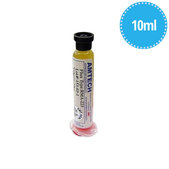
Solder paste is used when fitting and repairing electronic components. It contains fine metal particles and flux, which help form a soldered connection when heated.
It is used, for example, for:
- fitting components to a circuit board,
- repairing connectors,
- repairing small electronic components,
- selected tasks using a hot-air soldering station.
When choosing a product, consider the solder composition, working temperature, metal particle size and application method. Solder paste must be stored according to the manufacturer’s instructions.
Fluxes
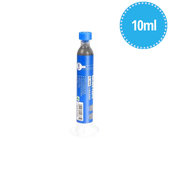
Flux helps improve the wetting of soldered surfaces and the formation of solder joints. It is used when repairing circuit boards, connectors and electronic components.
It is particularly helpful for:
- soldering wires and contacts,
- replacing connectors,
- repairing small components,
- reworking existing connections.
Fluxes differ in composition, consistency and whether subsequent cleaning is required. Choose a product according to the solder used, the working temperature and the type of repair being performed.
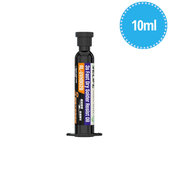
UV Solder Masks
A UV solder mask is used to cover and protect selected sections of a circuit board.
It can be used, for example, for:
- protecting repaired conductive tracks,
- restoring a damaged protective layer on a circuit board,
- separating adjacent conductive sections,
- reinforcing a selected area after repair.
After application, the mask is cured using UV light. Adjust the colour, layer thickness and curing time according to the specific product and repair being performed.
Camera and Optical Component Cleaners
Products for cameras and optical components are designed to clean selected surfaces around the camera.
They can help remove:
- dust,
- fingerprints,
- greasy marks,
- other surface dirt.
Before cleaning, determine whether the dirt is located on the external protective glass, underneath the glass or directly on the camera module. Use only products designed for optical and coated components.
Freezer Sprays
Freezer spray is used when diagnosing electronic circuits. Rapidly cooling a selected component may help determine whether the fault changes depending on temperature.
It is used, for example, for:
- locating temperature-dependent faults,
- testing the behaviour of electronic components,
- diagnosing intermittent faults,
- finding a problematic area of a circuit board.
Freezer spray is primarily intended for experienced users and service technicians. When applying it, maintain the recommended distance and avoid excessively cooling sensitive components.
Discounts for DIY Repairers and Repair Shops
DIY repairers can receive discounts on spare parts, tools and service products through the Fix-Handyman programme.
Professional repair shops, businesses and regular customers can benefit from a wholesale cooperation with discounts on spare parts, tools and service products based on their achieved turnover.
Frequently Asked Questions - FAQ
Can I use a regular cleaning product to clean electronics?
A regular household cleaning product may not be suitable for electronic components. It may contain substances that leave a residue or damage sensitive materials. Use a product designed for electronics and the specific surface.
Which concentration of isopropyl alcohol should I choose?
Products with different concentrations are available. Choose according to the intended use and the information provided with the product. A higher concentration alone does not guarantee that the product is suitable for every surface or component.
Is isopropyl alcohol suitable for cleaning a display?
Not every display or surface coating is resistant to isopropyl alcohol. For external screen cleaning, use a product designed for displays and follow the device manufacturer’s recommendations.
Can I repair a liquid-damaged device using isopropyl alcohol?
Isopropyl alcohol may be used as part of the cleaning process for suitable electronic parts, but it does not guarantee the removal of corrosion or the restoration of the device’s functionality. Do not turn on or charge a liquid-damaged device and have the extent of the damage inspected.
Can I apply a cleaning product directly to electronics?
This depends on the product and the part being cleaned. For precision work, a small amount is usually applied using an applicator, brush or suitable cloth, unless the manufacturer specifies a different method.
When can I turn on the device after cleaning?
Only when the cleaned part is completely dry and the product has also evaporated from areas underneath components and connectors. The required time depends on the amount used, the product’s composition and the construction of the part.
Are cleaning products safe for all plastics?
No. Some products may damage plastic, paint, seals or other surface finishes. Always check suitability according to the manufacturer’s information and, when uncertain, test the product first on a small, less visible area.
Related Categories
Detergents
Adhesives
Adhesive Tapes
Soldering Tools
ESD Antistatic Tools
Disassembly Tools
Measuring and Testing Tools
Holders and Fixing Tools

